


Daily berth rates at Marina di Porto Cervo vary widely based on vessel size, starting lower for small boats, increasing for midsize motoryachts, and reaching very high amounts for superyachts, which are often billed per square meter instead of a flat rate. Electricity, water, and connection fees are almost always extra. If you’re planning a July or August visit, book your berth months ahead and get everything, including utilities, confirmed in writing against the official tariff PDF.
- Rates vary significantly by vessel size, season, and location, with superyachts paying per square meter and often incurring premium fees for outer pier spots.
- Booking early, especially for peak July and August months, is essential to secure desired berths and confirm utilities and extra charges in writing.
- Additional costs such as electricity, water, security passes, and technical services can add a substantial percentage to the base rate, often unexpectedly.
- Berth category depends on length and width, with wider boats moving into higher pricing tiers and paying more during high season.
- Cancellation and modification policies can result in penalties or rate adjustments, making it crucial to clarify terms and request written estimates before payment.
Table of Contents
- Prezzi Ormeggio Porto Cervo: The Official Rate Snapshot
- How Does Porto Cervo Set Its Mooring Rates?
- What Extra Fees Show Up on a Porto Cervo Berth Bill?
- How Do You Book a Berth and Beat the Peak-Season Crunch?
- What Would a Typical Porto Cervo Invoice Actually Look Like?
- What Happens If You Need to Cancel or Change Your Booking?
- Are There Discounts for Early or Off-Peak Booking?
- What Other Services Cost Money Beyond the Berth Itself?
- How and When Do You Pay for a Porto Cervo Berth?
- What Contract Terms Should You Watch Before You Sign?
- Why Porto Cervo Costs More Than Almost Anywhere Else
- Let EtCharters Handle the Booking Headache for You
- Sources
Prezzi Ormeggio Porto Cervo: The Official Rate Snapshot
Porto Cervo splits its tariff year into several seasonal blocks, running from low season in winter and spring up through a high season that peaks in late July and August. Rates inside each block depend on the boat’s category, which is determined by length overall (LOA) and beam, not just LOA alone. Categories run from I through X, with a separate X+ tier reserved for the largest yachts.
The Porto Nuovo 2026 tariff schedule lists day rates that climb sharply as both category and season increase. A small sailboat in category I during low season pays a fraction of what the same boat costs at the peak of August. Here’s how that spread looks in practice:
These figures are drawn straight from the published tariff bands and give you a rough anchor point, not a quote. The marina explicitly reserves the outer stretch of Pier A for premium, dynamically priced berths, where superyachts pay above the standard X+ per-square-meter rate simply for the location. If you’re mid-category and flexible on exact placement, you’ll do better than a boat that needs a specific high-visibility spot.
How Does Porto Cervo Set Its Mooring Rates?
Your category isn’t just about length. Marina di Porto Cervo assigns berths based on LOA combined with total beam, so two boats of the same length but different widths can land in different pricing bands. That distinction matters most for catamarans and wide-beam motoryachts, which often get pushed up a category compared to a narrower boat of identical length.
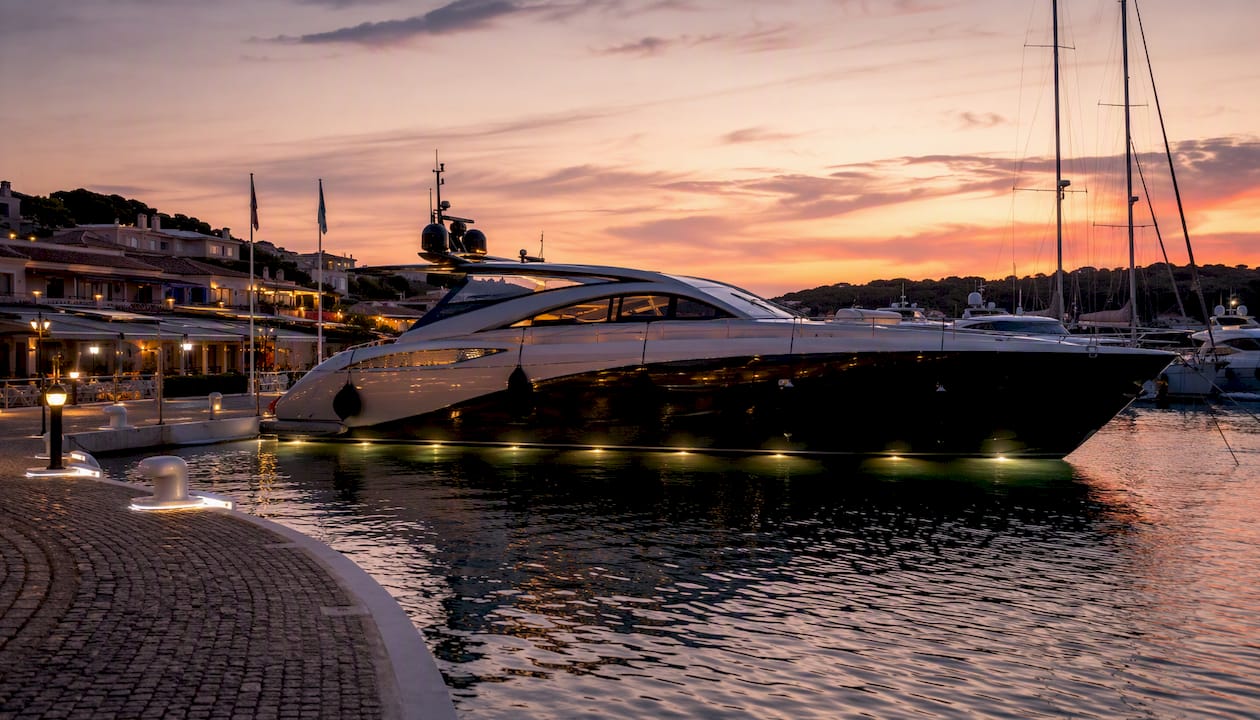
Once a yacht crosses into category X+, the billing logic itself changes. Instead of a flat daily figure, the marina switches to a per-square-meter charge, so a 45-meter yacht with a wide beam can end up paying meaningfully more than a slightly longer but narrower vessel. The tariff document also notes that VAT at 10% applies “where permitted,” and some of the published figures already reflect that tax. Ask specifically whether your quote is VAT inclusive before you compare numbers.
Seasonal brackets are where the real jump happens. Moving from shoulder season into the last two weeks of July, then into August, can more than double the base rate for the same berth. Book close to peak dates and expect the marina’s own management clause allowing rate adjustments to work against you.
What Extra Fees Show Up on a Porto Cervo Berth Bill?
The daily berth rate is the starting line, not the total. The tariff schedule breaks out electricity connections separately, with charges that scale by plug type: standard single-phase connections sit at the low end, while higher-amperage three-phase connections for larger yachts run into the hundreds of euros, with some premium power hookups and ISPS security pass fees documented at €300, €750, and €950 depending on the service level.
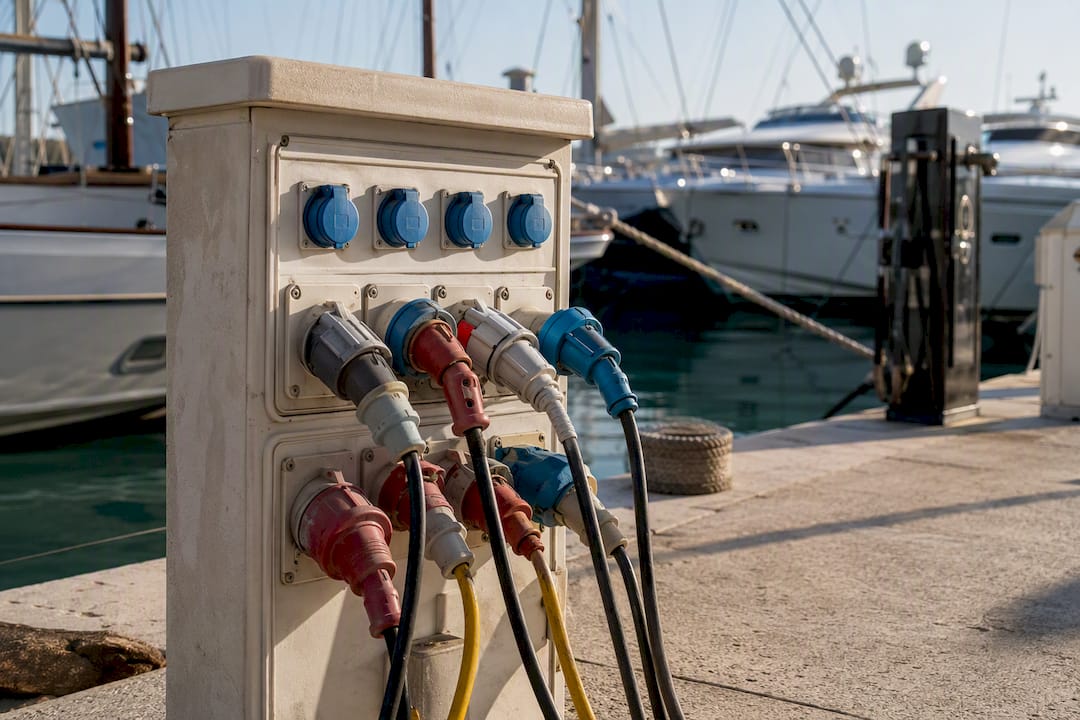
Water is typically metered or charged as a daily forfeit on top of that. Waste and garbage handling, emergency technical assistance, fueling, and any haul-out or yard work are billed as separate line items too. Navily’s community reviews back this up directly, with several boaters noting that water and electricity often arrive as surprise charges on top of what they expected from the base rate. Always ask for an itemized quote before arrival, and confirm in writing whether VAT is baked into the numbers you’re comparing.
How Do You Book a Berth and Beat the Peak-Season Crunch?
Marina di Porto Cervo runs its reservations through a booking module and direct contact channels listed on the official site, which also details the marina’s roughly 700 berths and around 100 dedicated megayacht slots. For anything in July or August, that contact needs to happen early, ideally several months out, since prime slots and outer-pier positions get claimed well before summer starts.
A few tactics make the difference between a smooth booking and a scramble:
- Confirm your exact category (LOA plus beam) before requesting a quote, so the number you get back is accurate.
- Ask for a written estimate that includes electricity, water, and any connection fees, not just the base daily rate.
- Clarify whether your berth is standard or falls under the premium outer-Pier A pricing.
- Check cancellation terms before you pay any deposit.
Pro Tip: If you’re chartering rather than owning, let a concierge or charter team handle the booking correspondence. Marinas often prioritize established operators during peak weeks, and it saves you the back-and-forth of chasing a reply in August. Reviewing general guidance on navigating Mediterranean marinas before your first Costa Smeralda trip also helps you spot which questions to ask upfront.
What Would a Typical Porto Cervo Invoice Actually Look Like?
Numbers help more than ranges, so here are three illustrative scenarios based on the published tariff structure. Treat these as ballpark planning figures, not quotes.
Scenario A: a 10-meter day cruiser. In shoulder season, the base berth rate lands around €150 to €200 a day. Add a modest single-phase electricity connection and light water use, and a realistic daily total sits near €200 to €250.
Scenario B: an 18-meter motoryacht. This falls into a mid-to-upper category, with a base rate that could run €600 to €900 in shoulder season and considerably more at peak. Add a three-phase power connection and metered water, and the daily total in August could reasonably reach €1,000 to €1,600.
Scenario C: a 45-meter superyacht. Billed per square meter under category X+, plus a high-voltage connection and, if berthed on the outer Pier A, a location premium. Peak-season totals here can climb into the thousands per day, echoing the anecdotal peak-night figures travel writers have flagged for Italy’s priciest marina.
What Happens If You Need to Cancel or Change Your Booking?
Berth reservations at Porto Cervo aren’t casual holds. Once you’ve confirmed a slot and paid a deposit, the marina’s terms typically lock in a cancellation window, and pulling out close to your arrival date can mean forfeiting part or all of that deposit. Modifying dates mid-booking, especially shifting into a higher-demand week, often triggers a rate recalculation rather than a simple date swap.
The safest approach is asking directly, before you pay anything, what the cancellation and amendment terms are for your specific dates. Marina management has historically reserved the right to adjust published tariffs, a clause documented in earlier Porto Vecchio rate tables, which means a rate you were quoted in March isn’t guaranteed to hold if your trip shifts into peak weeks. Get a dated, written estimate tied to your actual arrival window, not a general seasonal figure.
If you’re booking through a charter company or concierge service rather than directly with the marina, ask who absorbs a cancellation penalty if plans change. That distinction matters more during July and August, when the marina has little trouble refilling a canceled slot and less incentive to be flexible. Shoulder-season cancellations tend to have more breathing room simply because demand is lower.
Are There Discounts for Early or Off-Peak Booking?
Marina di Porto Cervo doesn’t publish a loyalty program or public discount tiers the way a hotel chain might. What it does reward, informally, is timing. Booking well ahead of peak season tends to get you first pick of standard berths at the published rate, before demand pushes you toward whatever premium spot is left.
Traveling in shoulder months, May, June, or September, is really the biggest lever you have. The seasonal rate tables show the gap between shoulder and peak pricing is often larger than any discount you’d find elsewhere, so shifting your dates by even two or three weeks outside of late July and August can meaningfully lower your total bill.
Repeat visitors and charter operators sometimes get preferential treatment on availability rather than a formal price break, since marinas value predictable, well-behaved traffic. If you charter through an established operator with an existing relationship at the marina, you may find booking friction lower even without a documented discount. There’s no substitute for asking directly whether any current promotion applies to your dates. Rates and any informal arrangements can shift year to year, so what applied last season isn’t guaranteed to carry over.
What Other Services Cost Money Beyond the Berth Itself?
Beyond electricity, water, and waste, a handful of additional services show up on longer stays or larger yachts. Security passes tied to ISPS compliance carry their own fee, separate from the berth rate, and scale with vessel size. Wi-Fi access is generally included at most Mediterranean marinas of this caliber, but connection reliability and speed can vary by pier, so don’t assume superyacht-grade bandwidth on a standard slip.
Parking for your shore vehicle is typically a separate arrangement, and given Porto Cervo’s limited space and high demand in summer, it’s worth confirming availability before you arrive rather than after. Technical services, haul-out, minor repairs, fueling, are billed individually and can add up quickly if your yacht needs attention during the stay.
If you’re arriving with crew, some additional passes or access credentials for staff moving between the boat and shore facilities may also carry a nominal charge. None of these line items are usually large individually, but stacked together on a week-long summer stay for a larger yacht, they can add a noticeable percentage on top of the base mooring cost. The same rule applies here as everywhere else in Porto Cervo’s pricing: ask for the full itemized list before you commit, not after your invoice arrives.
How and When Do You Pay for a Porto Cervo Berth?
Most bookings require a deposit to hold the slot, particularly during peak season when demand is high and the marina has no shortage of other boats waiting for the same space. The remaining balance is typically settled on arrival or departure, once actual utility usage and any additional services are tallied against the base rate.
Payment is handled in euros, as with any Italian marina, and standard bank transfer or card payment is the norm for settling invoices. If you’re arranging a berth through a charter company rather than directly, currency and payment logistics may run through that intermediary instead, which can simplify things if you’re coming from outside the eurozone. Confirm accepted payment methods before you travel, since not every marina office has the same card processing setup as a hotel front desk.
Timing your deposit matters as much as the amount. Paying early secures your category and rough date range, but the final invoiced total, once utilities and any premium pier charges are added, can shift meaningfully between booking and departure. Ask the marina office to confirm what’s covered by your deposit and what’s billed separately at checkout, so there’s no confusion when the final number lands.
What Contract Terms Should You Watch Before You Sign?
Every berth reservation comes with implicit contract terms even when you’re not signing a lengthy document. Minimum stay requirements can apply during peak weeks, meaning you may not be able to book a single night in August even if that’s all you need, especially for larger categories where turnover matters less to the marina than filling the slot for a full week.
Penalties for late arrival, early departure, or exceeding your booked category’s dimensions are standard across most premium Mediterranean marinas, and Porto Cervo is no exception. If your yacht turns out to be wider or longer than declared, expect a recalculated rate applied retroactively rather than a warning. That’s another reason to double check your vessel’s exact LOA and beam before requesting a quote, not after you’ve already committed to a date.
The marina’s stated right to adjust tariffs, carried over from earlier published rate sheets, means the number you agree to today is technically subject to change if your dates move or if you extend your stay into a different seasonal bracket. Read whatever confirmation email or booking terms you receive carefully, and don’t assume verbal quotes carry the same weight as a written, dated estimate.
Why Porto Cervo Costs More Than Almost Anywhere Else
Porto Cervo’s rates reflect what you’re actually buying: round-the-clock security, professional berthing crews, a technical yard capable of servicing superyachts, and customs and immigration services on site. That’s not marina overhead padding a number. It’s genuine service infrastructure that smaller ports simply don’t carry.
Costa Smeralda’s summer demand compounds it further. Everyone wants the same six weeks, which pushes prices up regardless of what the published tariff says on paper. My honest read: budget generously for July and August, or shift your dates into shoulder season if the price gap matters more to you than the exact calendar week. Either choice is legitimate. Pretending Porto Cervo will ever be cheap in August is the only real mistake.
— Emanuele
Let EtCharters Handle the Booking Headache for You
Chasing down category assignments, connection fees, and peak-season availability eats hours you’d rather spend planning the trip itself. Etcharters works Costa Smeralda year round and knows which berths, and which weeks, come with fewer surprises on the final invoice. Instead of navigating the tariff PDF and marina booking module solo, you get someone local handling the coordination while you focus on the itinerary.
If you’re chartering rather than mooring your own boat, the math changes entirely, since berth logistics become the crew’s problem, not yours. Browse current charter options in Sardinia or reach out directly through Etcharters to get a real quote for your dates and vessel size before peak season books out.
Sources
- Porto Nuovo 2026 | Tariffe giornaliere – Daily rates (Marina di Porto Cervo)
- Marina di Porto Cervo (Navily listing and community reviews)
- Viaggio a Porto Cervo: La Marina più costosa D’Italia (Anyships)

