


If you want one pair that handles most days on deck, get a Sebago for classic moc-toe versatility, a Paraboot if you want the sole and leather to outlast a decade of saltwater, and a Bekk or Velasca if you care as much about how the shoe looks at dinner as how it grips the swim platform. The one non-negotiable across every option: a non-marking rubber sole cut with siping—the thin razor grooves that channel water off wet fiberglass and teak so you don’t end up on your back mid-step. Skip anything without visible siping. It’s a lifestyle shoe wearing a costume, not a real boat shoe. All the brands below sell into Italy, either through their own sites or Italian retailers, so availability isn’t the bottleneck. Fit and sole quality are.
- Sebago — classic leisure and smart-casual wear on deck or at the marina bar
- Paraboot — long-term durability, refined leather that ages well
- Bekk / Velasca — Made-in-Italy suede moccasins for style-first buyers who still want deck grip
- Docksteps — light, casual summer wear, harbor-to-town flexibility
- Only boat shoes with visible siping across the entire sole provide reliable grip on wet surfaces, regardless of brand or price.
- Fit should be snug with no break-in time, and the sole’s profile is more important than leather quality when choosing a deck shoe.
- Leather resists saltwater best if treated regularly, but suede offers sharper looks and requires frequent conditioning.
- Reserve one dedicated, non-marking pair for the boat to prevent grit and scuffs on delicate finishes.
- Proper footwear briefings on charters ensure guests wear appropriate shoes and follow etiquette, reducing damages and cleaning efforts.
Table of Contents
- Comparing the Top Scarpe Da Barca on the Market
- What Should You Check Before Buying Boat Shoes?
- How Do You Keep Boat Shoes From Falling Apart in Saltwater?
- Socks or No Socks? Style Rules for Wearing Boat Shoes
- What Crews Actually Expect From Guests’ Footwear
- The Buying Advice People Get Wrong
- A Different Way to Handle Footwear and Etiquette on Board
- Key Takeaways
- Sources
Comparing the Top Scarpe Da Barca on the Market
Before you compare specs, know what you’re actually shopping for: a shoe built for wet, sloped, often slippery surfaces, not a boat-styled sneaker. Expert buyer guides consistently flag the same three markers as decisive: sole profile, siping, and drainage, with upper material durability close behind as a fourth factor separating a shoe that lasts one season from one that lasts five, according to SVB Marine’s testing notes.
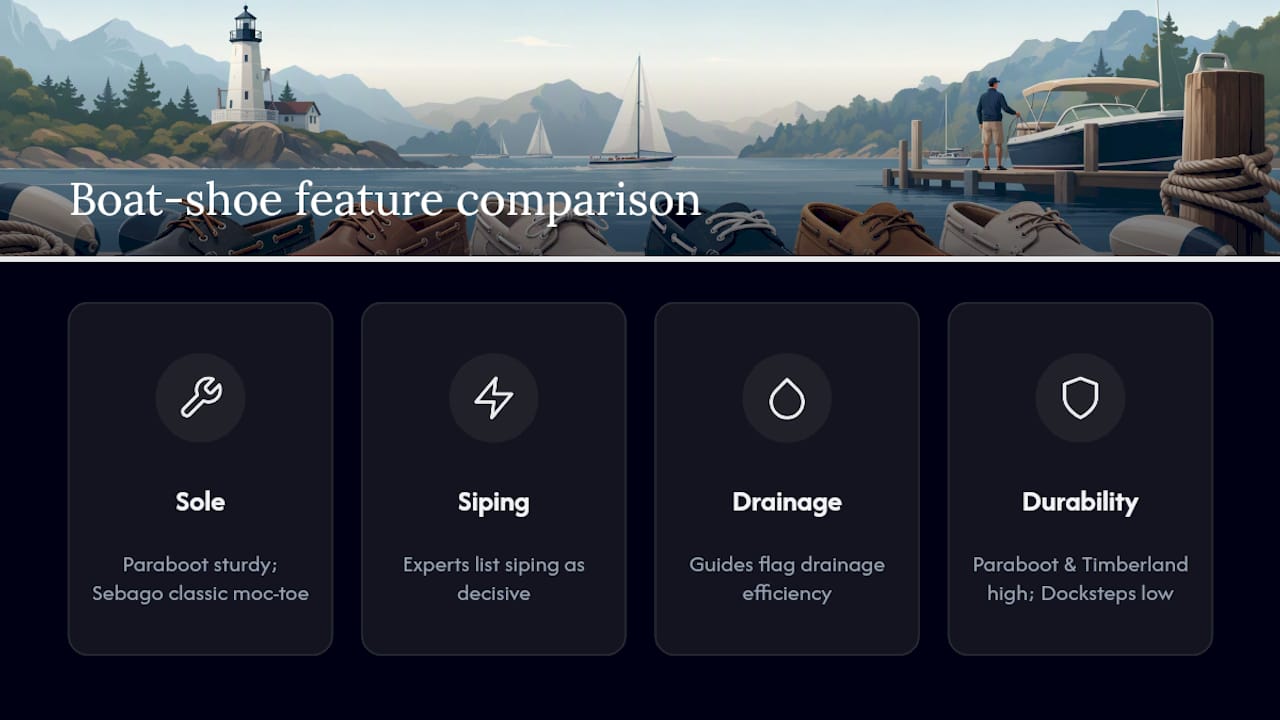
Sebago earns its reputation the old way: it’s been making the moc-toe deck shoe since the 1940s, and the construction hasn’t needed much reinvention because it works. Paraboot goes the other direction, leaning into thicker leather and a sturdier last that trades a little flexibility for a sole that shrugs off years of saltwater and sun.
Velasca and Bekk both sell the artisan Italian angle, but they’re not identical. Velasca runs a broader size range and more colorways; Bekk leans into a single, focused silhouette in supple camoscio suede that reads more formal off the boat. Docksteps sits at the accessible end, built for someone who wants a boat shoe two or three times a summer, not a shoe that lives on deck. Sperry remains the brand most people picture when they hear “boat shoe,” largely because it popularized the style itself, while Timberland brings its waterproof leather heritage to a slightly chunkier, more rugged silhouette.
What Should You Check Before Buying Boat Shoes?
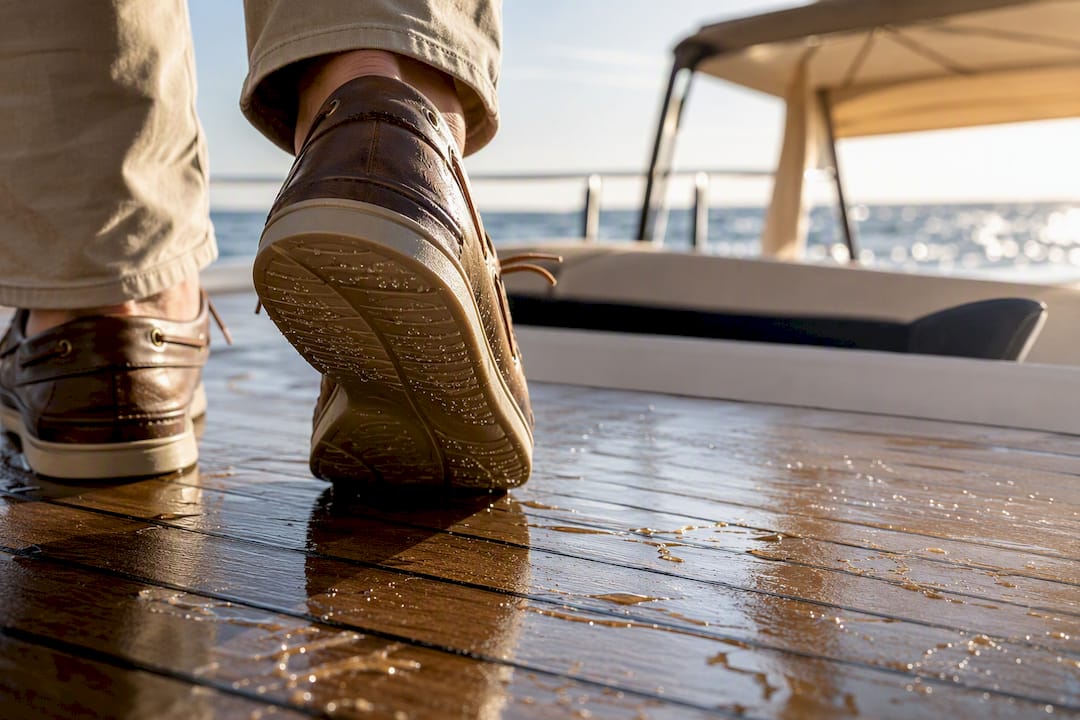
Start with the sole, not the leather. Flip the shoe over and look for tight, shallow horizontal cuts across the whole contact patch. That’s siping, and it’s what actually keeps you upright on a wet swim platform. A smooth sole, or one with only a few token grooves near the toe, isn’t built for wet decks even if the marketing calls it a boat shoe.
- Turn the shoe over and confirm visible, multi-directional siping across the full sole, not just the edges.
- Try it on with the socks (or bare feet) you’ll actually wear; boat shoes should fit snug at the heel with almost no break-in period.
- Check for a low profile sole; too much cushioning reduces the sensitivity you need to feel the deck angle change under you.
- Look for drainage-friendly stitching or eyelets if the model claims water resistance.
- Inspect the upper: full-grain leather resists salt better than untreated suede, but suede breathes better in heat.
- Confirm return policy before buying online, since fit varies more between brands than sizing charts suggest.
Pro Tip: Buy boat shoes a half size smaller than your sneakers. Real deck shoes are designed to mold to your foot fast, and a loose fit undermines the grip the siping is supposed to give you.
Retailers who specialize in marine gear tend to hammer this same point: an anti-slip profile with proper drainage isn’t a nice extra, it’s the entire reason the category exists, according to Nautisports’ buying notes.
How Do You Keep Boat Shoes From Falling Apart in Saltwater?
Leather uppers handle saltwater best when treated, but they still need attention. Suede and nubuck look sharper on land but soak up water and salt stains faster, and canvas dries quickest but offers the least structure over time. Synthetic uppers resist salt damage well but rarely age gracefully.
- Rinse shoes in fresh water immediately after any saltwater exposure, before salt crystals set into the leather grain.
- Wipe with mild soap and a soft cloth, never harsh detergent.
- Air-dry away from direct sun or heaters; both dry out leather and warp soles.
- Condition leather every few weeks during heavy summer use.
- Re-impregnate suede with a proper protector spray after cleaning, not before.
- Retire the shoe once siping looks smoothed over or the sole shows visible cracking; grip doesn’t come back once the tread is worn flat.
A technical breakdown of boat-shoe soles notes that siping loses effectiveness gradually and unevenly, so a shoe can look fine while already sliding on wet gelcoat. Waterproofing sprays help extend a shoe’s life, but they don’t restore tread that’s already worn smooth.
Socks or No Socks? Style Rules for Wearing Boat Shoes
Boat shoes were designed to be worn barefoot; the moc-toe stitching and leather lining were built for breathability against skin, not fabric, according to L.L.Bean’s product guidance. No-show socks work fine on land, but on a hot deck, bare feet stay cooler and the shoe fits closer to how it was engineered.
Pair them with rolled chinos or shorts for daytime, jeans for evening ashore. Keep a dedicated deck-only pair for actual boat use, since street grit embedded in a sole will scratch teak and gelcoat the moment you step aboard, as The Clever Boater points out.
- Do keep one clean pair reserved only for the boat.
- Do wipe soles before boarding, even if they look clean.
- Don’t wear the same shoes you walked the marina docks in straight onto white deck surfaces.
- Don’t assume any leather loafer counts as a boat shoe; check the sole first.
What Crews Actually Expect From Guests’ Footwear
Most crewed charters brief guests on footwear right at embarkation, and it’s rarely a suggestion. On luxury yachts, hosts sometimes hand out disposable shoe covers or ask guests to bring one clean, dedicated deck pair specifically to protect teak and gelcoat from grit and scuffing.
Crews consistently prefer guests arrive with a single non-marking pair set aside only for the boat. It saves post-charter cleaning time and protects finishes that are expensive to repair.
The simplest fix: pack one pair of proper boat shoes, rinse them the moment saltwater touches them, and never wear them off the boat between excursions, just like when you drop off your car at a cruise terminal to keep things hassle-free. That one habit prevents most of the scuffing and grit transfer crews deal with after a week-long charter.
The Buying Advice People Get Wrong
Most guides treat this as a fashion decision first and a function decision second. That’s backward. A shoe without real siping is a loafer wearing a boat shoe’s reputation, and no amount of leather quality fixes that. The conventional advice, “pick a brand you like the look of,” skips the one question that actually matters: can you see distinct, shallow grooves across the whole sole, not just near the toe?
Price doesn’t map cleanly to performance either. Paraboot costs more than Sebago mostly because of leather thickness and construction longevity, not because the sole grips better on a wet swim platform. If your priority is safety on deck, a $130 Sebago with proper siping beats a $300 shoe with a decorative tread pattern every time.
What I’d prioritize first: sole integrity, then fit, then style. Most buyers do the reverse, and it’s how people end up owning a closet full of boat-styled shoes that have never actually been safe on a boat.
— Emanuele
A Different Way to Handle Footwear and Etiquette on Board
Buying the right pair solves half the problem. The other half is knowing what a specific yacht expects, and that varies by vessel, crew, and itinerary in ways no shoe guide can cover. Etcharters runs crewed charters across Sardinia and the wider Mediterranean, and every trip includes a footwear and etiquette briefing from the crew at embarkation, so guests aren’t guessing about deck rules on day one.
That’s the real difference between buying a great pair of boat shoes on your own and booking a hosted charter experience: the guesswork about what’s appropriate, when to go barefoot, and how the crew handles cleaning gets answered before you ever step aboard. If you’re planning a trip to Sardinia and want the footwear questions solved for you, check available dates for a luxury yacht charter in Sardinia.
Key Takeaways
The best boat shoe for saltwater use always has a visibly siped, non-marking rubber sole, regardless of brand or price point.
| Point | Details |
|---|---|
| Prioritize the sole first | Check for visible siping across the whole contact patch before judging leather or brand. |
| Fit tight, not loose | Boat shoes should feel snug immediately; they mold fast and don’t need a long break-in period. |
| Match material to use | Leather resists salt best; suede looks sharper but needs more frequent conditioning. |
| Keep a dedicated pair | Reserve one pair only for deck use to avoid transferring grit onto teak or gelcoat. |
| Book the guesswork away | Etcharters briefs guests on footwear and deck etiquette at embarkation on every Sardinia charter. |

