


A yoga-in-barca retreat pairs guided yoga practice with time on a sailing boat, either entirely aboard or split between shore classes and sailing days. It suits open-level to intermediate practitioners who like small groups, don’t mind a moving floor, and want travel built around movement and rest rather than sightseeing. Before booking anything, run through the checklist further down this guide.
TL;DR:
- Check that the instructor has verified training hours and extensive experience teaching on boats, not just in studios, to ensure safety and quality.
- Confirm the itinerary specifies anchorages, practice frequency, and clear weather policies, avoiding vague descriptions or flexible schedules.
- Ensure safety protocols are detailed, including lifejackets, emergency plans, SUP safety measures, and mobility accommodations, with clear written policies.
- Ask whether equipment rental, meals, transfers, and insurance are included or charged separately, and verify this before booking.
- Prioritize operators with a proven track record and clear cancellation policies over scenic marketing images to guarantee a well-managed experience.
Table of Contents
- What Does a Yoga-at-Sea Retreat Actually Look Like?
- Why Combine Yoga and Sailing in the First Place?
- What Types of Sessions and Add-Ons Should You Expect?
- How to Prepare and What to Pack for Yoga on a Sailing Boat
- What Should You Check Before Booking a Yoga-Sailing Retreat?
- Where Do These Retreats Run Best, and What Should a Route Look Like?
- What Safety and Logistics Should You Confirm Before Paying?
- How ETCharters Supports a Yoga-at-Sea Retreat
- Ready to Book Your First Yoga-on-Boat Trip?
- The Part Most Guides Get Wrong About Yoga-Sailing Trips
- Sources
What Does a Yoga-at-Sea Retreat Actually Look Like?
Two formats dominate the market. A fully on-board retreat keeps you sleeping, eating, and practicing on the same vessel for the entire trip, with the boat repositioning overnight or between sessions. A mixed retreat alternates: a few nights ashore, yoga classes on land or on a dock, then a day or two of sailing with practice on deck or at anchor.
A typical day on either format follows a rhythm most instructors don’t deviate from much:
- Early morning practice before the boat gets moving, often on deck while the water is still glassy.
- A sailing leg mid-morning to a new anchorage or cove.
- Free time for swimming, SUP, or rest in the early afternoon.
- An optional restorative or breathwork session late afternoon.
- Sunset meditation or a gentle wind-down practice, weather permitting.
Deck space is finite, so class size and mat placement depend on the boat. A 12 to 15 meter sailing yacht might comfortably hold six to eight practicing guests; anything larger allows bigger groups but rarely improves the instructor-to-student ratio, which tends to stay around one teacher for every six to ten people regardless of boat size.
Why Combine Yoga and Sailing in the First Place?
The pairing works because it solves two problems at once: it gets you off a screen and it gets you moving without another gym routine. Teachers describe outdoor practice tied to open water as a form of moving meditation, where breathwork syncs naturally with wind and wave rhythm instead of a studio playlist.
The physical case is just as strong:
- Balance work improves fast when your mat is on a mildly rocking surface.
- SUP yoga adds serious core engagement because the board never stops correcting itself under you.
- Salt air and full-body movement leave most people sleeping better by the second or third night.
This format is not for everyone. Anyone prone to serious motion sickness, with significant mobility limits, or who needs a completely still surface for balance poses should ask hard questions before booking. Good instructors adjust: they shorten standing sequences on choppy days, lean into seated and restorative poses, and move SUP sessions to sheltered bays when the wind picks up.
Pro Tip: Ask the organizer directly how they modify sequences for rough water. A vague answer is a red flag; a specific one (shorter holds, more seated work, moved to a calmer anchorage) tells you they’ve actually taught on boats before.
What Types of Sessions and Add-Ons Should You Expect?
Retreats typically mix three or four session styles across a week rather than repeating the same class daily:
- On-deck vinyasa for the main morning or evening flow, built around available space and wind conditions.
- Restorative and meditation sessions, usually shorter, often scheduled after a swim or at sunset.
- SUP yoga, the signature add-on for boat-based retreats, combining balance poses with paddleboard stability work.
- Workshops or short teacher-training modules on longer charters, covering anatomy, breathwork, or sequencing basics for practitioners who want more than a vacation.
Beyond the mat, expect snorkeling stops, short coastal hikes at anchorage towns, and mindful group meals built around local produce. Spa or massage add-ons appear on higher-end charters but aren’t universal, so confirm before assuming.
Pricing for standalone SUP yoga sessions in outdoor markets like Barcelona runs between €13 and €30 when the board and safety gear are included, and that range mostly comes down to whether equipment rental and a safety briefing are bundled in or billed separately.
How to Prepare and What to Pack for Yoga on a Sailing Boat
Space on a boat is tight, so pack with intention rather than bringing your full home yoga kit.
- A thin, quick-dry mat or a non-slip travel towel works better than a bulky studio mat that takes forever to dry.
- Layered clothing matters more than technical yoga wear. Mornings on deck run cool even in warm destinations.
- Reef-safe sunscreen protects both your skin and the water you’re anchored in.
- A reusable water bottle you can clip or wedge somewhere secure, since loose items roll on a moving deck.
On the health side, bring your preferred motion-sickness remedy even if you rarely get seasick. Boats move differently than cars, and the first day catches people off guard. Quick-dry footwear with grip beats flip-flops for boarding and deck work.
Confirm booking-day logistics before you travel. Many outdoor and boat-based sessions run on decentralized booking, with organizers using WhatsApp to confirm exact meeting points and last-minute schedule changes rather than a formal ticketing system. Some smaller operators also expect exact cash for add-on sessions, so ask ahead rather than assuming card payment works dockside.
Pro Tip: Save the operator’s WhatsApp number before departure, not after you land. Coastal signal is patchy, and you don’t want to be scrambling for contact details at a marina with no Wi-Fi.
Shared deck space also means shared etiquette: keep gear stowed when not in use, and skip strong-scented products that linger in tight cabin spaces.
What Should You Check Before Booking a Yoga-Sailing Retreat?
Run through this list before you send a deposit anywhere.
- Instructor credentials. Ask for RYS or RYT training hours and how many years they’ve specifically taught on boats, not just in studios.
- Language of instruction. Some providers run English-language classes as the default at their outdoor and coastal locations, while others teach only in the local language, so confirm ahead if that matters to you.
- Itinerary clarity. A real itinerary names anchorages, practice frequency, and rough daily timing, not just “sailing and yoga included.”
- Weather and cancellation policy. Ask specifically what happens if a session or sailing day gets scrubbed for weather. A refund-if-rain clause is a detail most generic guides skip entirely, yet it materially affects whether your money is protected.
- Inclusions. Confirm whether meals, SUP equipment, airport transfers, and insurance are bundled or extra.
- Group size and accessibility. Ask how many guests are booked for your dates and whether the boat can accommodate mobility limitations.
A vague itinerary, no mention of safety equipment, or a cancellation policy the organizer can’t explain clearly in one sentence are the three biggest red flags. If a host can’t answer these on the first message, that tells you something about how the actual trip will run.
Where Do These Retreats Run Best, and What Should a Route Look Like?
Good yoga-sailing routes share a few traits regardless of region: sheltered anchorages for calm-water practice, short hops between stops so sailing days don’t eat the whole schedule, SUP-friendly bays with minimal current, and at least one anchorage positioned for a clean sunrise or sunset session.
Seasonality shapes all of it. Calmer summer wind windows widen the hours usable for deck practice and SUP; shoulder-season trips trade some outdoor flexibility for quieter anchorages and lower prices.
Three sample rhythms cover most trip lengths:
- 3-day intro: two practice sessions daily, one short sailing leg, minimal port-hopping. Good for a first taste without committing a full vacation.
- 5-day restorative: one practice session daily plus an optional evening class, two to three anchorage changes, built around rest as much as movement.
- 7-day immersive: twice-daily practice, four or more anchorages, at least one full SUP-yoga day and a workshop or teacher-led discussion evening.
When you’re reading a listing, translate vague language into specifics: “scenic coastal stops” should map to named anchorages, and “flexible schedule” should still include a stated minimum number of sessions per day. If a destination guide names actual bays and timing windows, that’s a stronger signal than generic marketing copy.
What Safety and Logistics Should You Confirm Before Paying?
A legitimate operator answers these without hesitation, and asking upfront saves you from discovering gaps mid-trip.
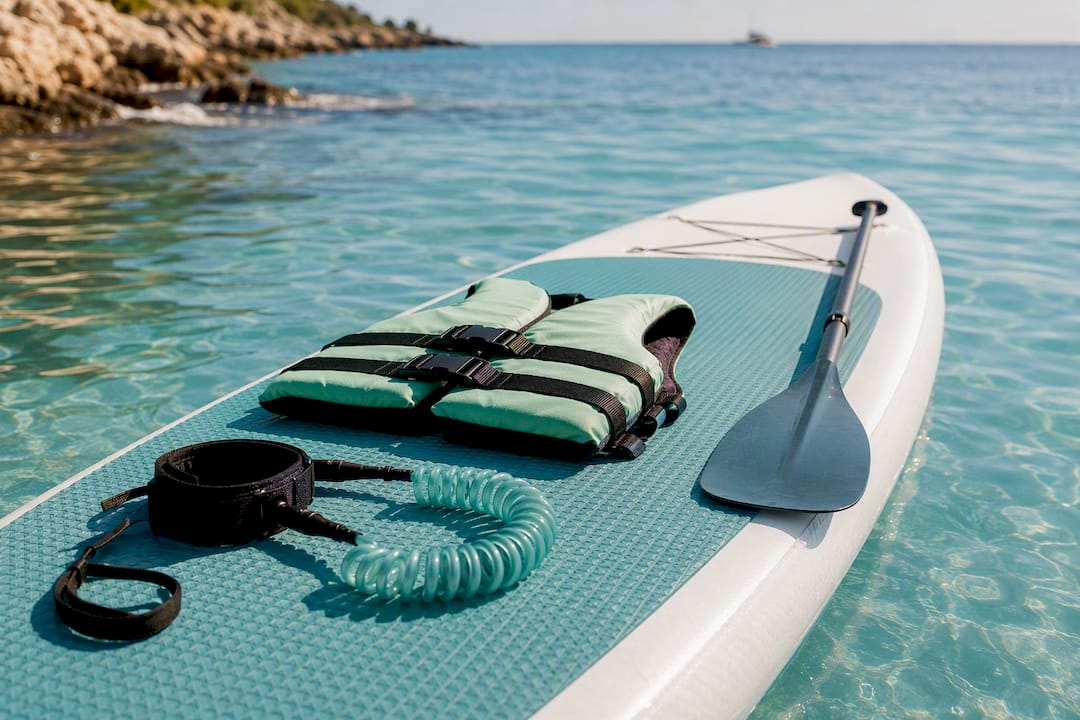
- Confirm the boat has a certified skipper, adequate lifejackets for every guest, and a stated emergency briefing at the start of the charter.
- Ask how much deck space is allotted per person during practice, and whether the instructor uses a microphone or projects vocally for larger groups.
- SUP sessions need their own safety protocol: leash use, a spotter in the water, and a clear plan for currents or boat traffic nearby.
- Get the weather contingency plan and refund or reschedule terms in writing, not just verbally promised.
- Disclose any preexisting conditions or mobility limits ahead of time so the crew and instructor can plan around them rather than improvising on day one.
How ETCharters Supports a Yoga-at-Sea Retreat
A crewed luxury charter removes most of the friction independent bookings carry. Etcharters runs dedicated skippers and hostesses on every charter, handles bespoke menus around dietary needs, and provides 24/7 support for the length of the trip, not just check-in day.
For yoga specifically, that translates into practical fixes:
- Scheduled deck time blocked out for practice, so sessions don’t compete with crew operations or guest transfers.
- Storage and provisioning handled for mats, SUP boards, and safety gear ahead of arrival.
- Coordination with a visiting instructor if you’re bringing your own teacher aboard, including onboard connectivity for remote scheduling needs.
- Clear, written booking terms and a concierge who arranges transfers and teacher logistics rather than leaving guests to sort it out solo.
Readers weighing a private option over a group retreat can look at Sardinia charter listings to compare what a fully crewed setup includes versus a shared group booking.
Ready to Book Your First Yoga-on-Boat Trip?
Start by picking your format: fully on-board or mixed shore and sailing. Then run the checklist above against any listing before paying a deposit, and ask directly about weather contingencies and instructor hours.
Five questions worth asking every host: how many training hours does the instructor have, how many guests are booked for your dates, is SUP included or extra, what’s the safety and insurance setup, and what happens if weather cancels a session? If you want the logistics handled rather than pieced together yourself, Etcharters’ luxury yacht rental options are worth a look before you commit to a group retreat.
The Part Most Guides Get Wrong About Yoga-Sailing Trips
Most content on this topic reads like a destination brochure: pretty coves, sunset poses, a few stock phrases about tranquility. What actually determines whether your trip goes well has almost nothing to do with the scenery and everything to do with operational detail nobody bothers to publish.
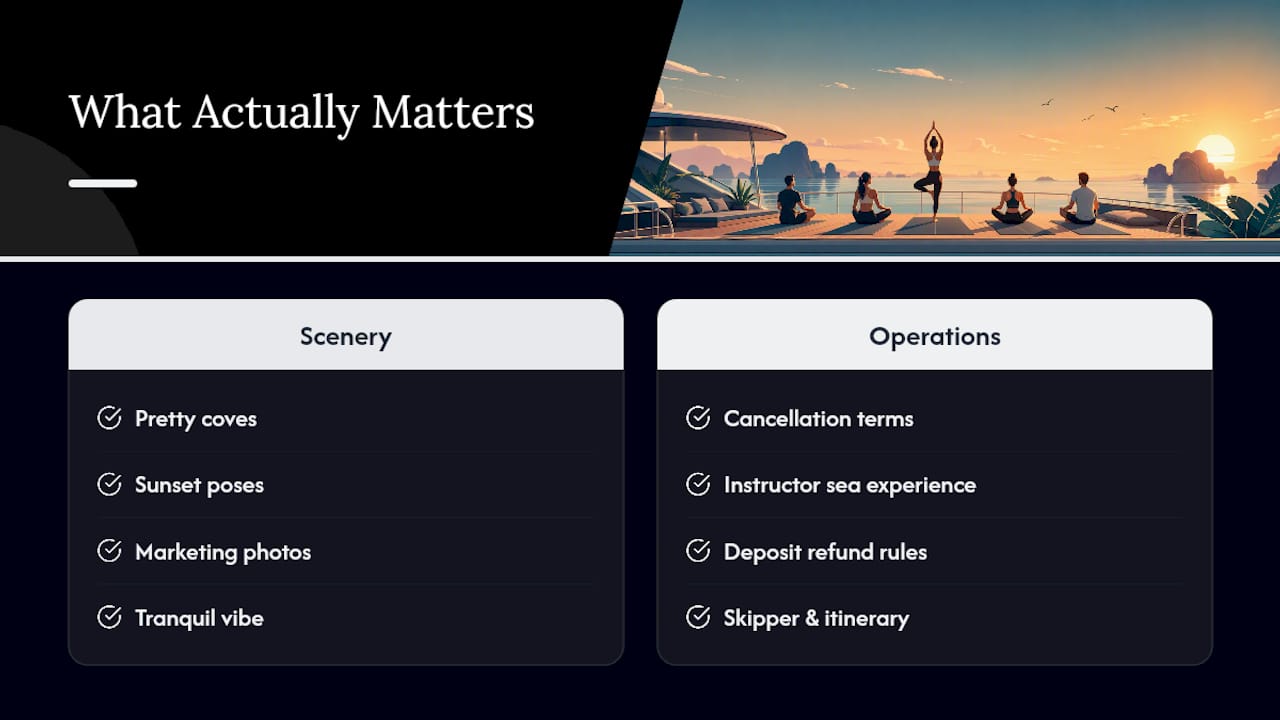
The conventional advice tells you to pick a beautiful location and trust the vibe. That’s backwards. The better first move is interrogating the boring stuff: how the operator handles a canceled session, whether the instructor has actually taught on a moving deck before, what happens to your deposit if a storm rolls in on day three. A gorgeous anchorage means nothing if the retreat has no refund policy and an instructor who’s never modified a sequence for choppy water.
If I had to prioritize one thing, it’s this: treat the credentials and cancellation terms as the deciding factor, not the marketing photos. A boutique crewed charter with a clear itinerary and a skipper who’s done this before will outperform a cheaper group retreat with vague answers every time. The destination is replaceable. A well-run trip is not.
— Emanuele
Sources
- Outdoor Yoga in Barcelona: Where to Go, What It Costs, How to Book — Barcelona Urbana
- Outdoor Open Yoga Barcelona | Meetup
- Hot Yoga Barcelona

