


The best way to avoid jellyfish in the sea is simple: check for flags and lifeguard reports before you swim, scan the water surface for translucent shapes, and skip the water entirely if you spot one nearby. If you do get stung, the single most important move is to exit the water calmly and rinse the area with seawater, never fresh water, then scrape off any tentacles with a rigid card instead of rubbing them.
Always check beach flags and local reports before entering the water to avoid active jellyfish blooms, especially after storms or during mid-afternoon hours.
Wearing synthetic, close-fitting clothing like lycra rashguards or stinger suits significantly reduces the risk of tentacle contact and sting severity.
Rinse the sting area with seawater, remove tentacles with a plastic card, and apply heat around 104 to 113°F to break down venom, avoiding folk remedies.
Spotting translucent, floating clusters, cloudy water patches, or washed-up tentacle fragments indicates a bloom, prompting you to leave the water calmly.
Immediate emergency help is necessary if a sting causes severe symptoms, involves the face or genitals, or affects vulnerable individuals like children or those with allergies.
Table of Contents
How Can You Avoid Meduse in Mare Before You Even Get Wet?
What Clothing Actually Blocks a Jellyfish Sting?
Why Do Jellyfish Blooms Happen, and How Should You React?
Do Anti-Jellyfish Creams and Sprays Actually Work?
What Are the Correct First-Aid Steps for a Jellyfish Sting?
When Does a Jellyfish Sting Need Emergency Care?
What Do Charter Crews Do Differently to Avoid Jellyfish?
Want the Sea Without the Guesswork?
How Can You Avoid Meduse in Mare Before You Even Get Wet?
Run through this list before every swim, snorkel session, or beach day. It takes thirty seconds and it’s the difference between a normal afternoon and an emergency room visit.
Check the beach flags and any posted lifeguard notices. A purple flag (or local equivalent) usually signals jellyfish or other marine hazards.
Look up a local monitoring app or recent social media reports for your beach. Coastal towns increasingly track blooms in near real time using community photo reports and lifeguard logs.
Scan the surface of the water and the shoreline for jellyfish bodies or stray tentacles before wading in.
Skip the swim after a storm or during strong onshore wind, since both tend to push jellyfish toward the coast.
Swim earlier in the day when surface blooms are less concentrated, rather than mid-afternoon when the sun has warmed the top layer of water.
Keep kids within arm’s reach at all times and never let them swim unsupervised, even in shallow water.
Combining these checks with basic behavioral rules is genuinely the strongest defense available. Public health and travel-safety guidance consistently points to the same formula: know the local conditions, then act accordingly. None of this requires special equipment, just five minutes of attention before you commit to the water.
What Clothing Actually Blocks a Jellyfish Sting?
Cotton does almost nothing against a jellyfish tentacle. Synthetic, close-fitting fabrics like lycra rashguards and stinger suits perform far better because they physically block the nematocysts, the stinging cells, from reaching skin. Research on protective swimwear consistently recommends synthetic materials over cotton for anyone spending extended time in the water.
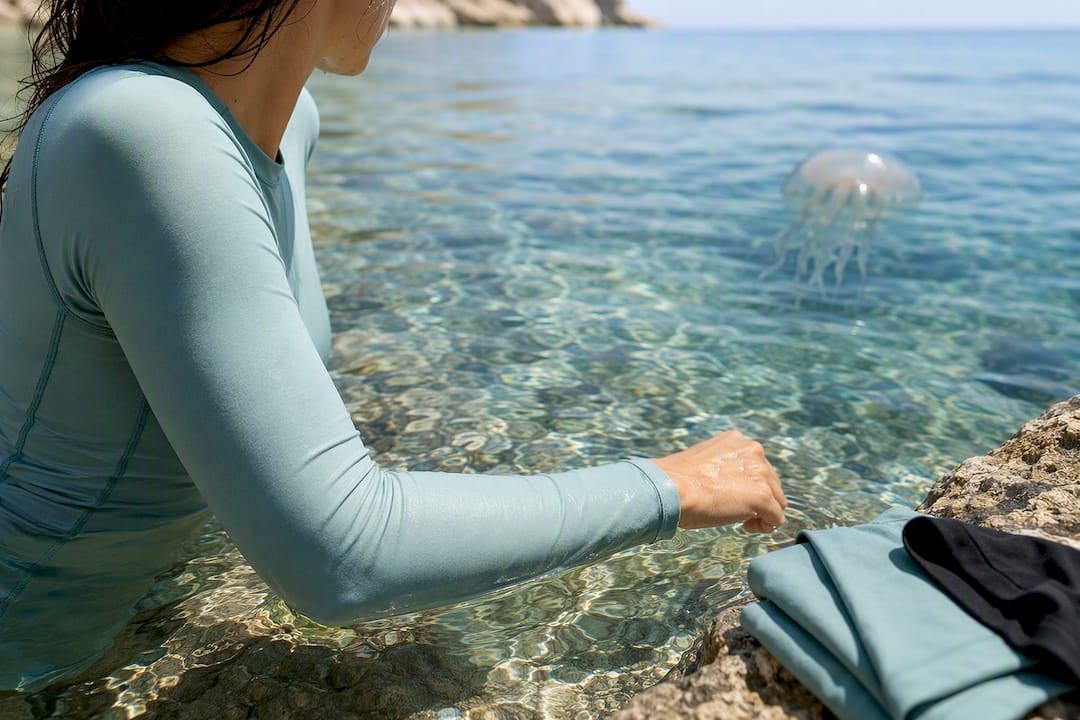
For snorkeling trips, long open-water swims, or outings with children, a lightweight wetsuit or a full stinger suit offers the best physical barrier available. These suits cover the torso, arms, and legs completely, leaving little exposed skin for a tentacle to brush against.
A few practical additions matter more than people expect:
Wear gloves and neoprene booties when snorkeling around rocky coves, where jellyfish often drift close to the shoreline.
Add a hood or neck gaiter if you’re swimming through a known bloom area, since the neck and face are common contact points.
Check the fit carefully. A loose wetsuit collar or baggy sleeve gives a tentacle room to slip underneath, which defeats the purpose of wearing one.
Pack a spare rashguard, a quick-dry towel, and a stiff plastic card (an old gift card works) specifically for tentacle removal.
Pro Tip: Keep the plastic card in a small dry bag inside your beach tote. It sounds excessive until you actually need it and every other card in your wallet is thirty feet away in the car.
Why Do Jellyfish Blooms Happen, and How Should You React?
Warm surface water, weak currents, and fewer natural predators all combine to push jellyfish populations up during summer. Pelagia noctiluca, one of the most common Mediterranean species, thrives under exactly these conditions and carries a real urticant punch despite its small size, according to seasonal bloom research.
Certain visual cues tell you a bloom is active before you ever get in the water. Watch for these signs on the surface and along the shore:
Clusters of translucent, umbrella-shaped bodies floating near the surface, sometimes in loose chains.
Water that looks slightly discolored or cloudy in patches, distinct from the surrounding sea.
Tentacle fragments washed up on the sand, even without visible jellyfish nearby.
If you spot any of these, don’t splash aggressively or try to push past a cluster. Keep your distance and withdraw calmly toward shore. Local lifeguards and flag systems exist precisely for this scenario, and checking them before you swim beats guessing based on how the water looks from the beach.
Do Anti-Jellyfish Creams and Sprays Actually Work?
Barrier creams reduce risk, they don’t eliminate it. Products formulated to interfere with nematocyst activation have shown real, if partial, protective effects when applied correctly before immersion. The mechanism is straightforward: the cream coats the skin and disrupts the chemical trigger that fires a jellyfish’s stinging cells on contact.
Their practical value shows up most for casual swimmers and families who won’t wear a full stinger suit for a quick dip. Here’s how to use them properly:
Apply generously to all exposed skin at least ten minutes before entering the water, following the label’s instructions.
Reapply after towel-drying or after any swim lasting longer than the product’s stated protection window.
Do a patch test on a small area of skin the day before, especially for children or anyone with sensitive skin, and ask a pharmacist if you’re unsure about a specific product.
Buy from pharmacies or established retailers, and be skeptical of any spray promising complete or guaranteed protection. No cream on the market claims that, and any label that does is overselling.
What Are the Correct First-Aid Steps for a Jellyfish Sting?
Follow these steps in order, and skip nothing:
Exit the water calmly. Thrashing or swimming hard increases contact with remaining tentacle fragments and spreads venom further into the skin.
Rinse with seawater, never fresh water. Fresh water changes the osmotic pressure around any stinging cells still attached to the skin and can trigger them to fire again, according to emergency guidance on common sting mistakes.
Scrape off visible tentacles with a rigid plastic card. Hold the card flat and scrape in one direction, away from the body, then check the area and repeat if fragments remain. Avoid metal edges or sharp objects, which can cut skin and leave debris behind.
Apply heat where it’s safe to do so. Immersing the area in water around 104 to 113°F (40 to 45°C), or using a hot pack, helps because many Mediterranean jellyfish toxins are thermolabile, meaning heat breaks them down faster. Use caution with young children, since their skin burns more easily at the same temperature.
Treat itching with a pharmacist-recommended topical gel or astringent, and keep the stung area covered or shaded from direct sun for 10 to 15 days to reduce the risk of lasting skin discoloration.
Skip the folk remedies entirely. Urine, alcohol, ammonia, and rubbing sand into the sting are all ineffective and can make things worse by irritating the skin further or triggering leftover stinging cells, a pattern confirmed across multiple safety reviews.
Most stings resolve within a day or two once you skip the myths and follow this sequence. The scraping step alone, done correctly with a flat card rather than fingers, prevents a huge share of the secondary irritation people report after a sting.
When Does a Jellyfish Sting Need Emergency Care?
Most stings are painful but manageable at home. Call for help immediately if you notice any of the following:
Difficulty breathing, fainting, chest pain, or severe, repeated vomiting.
Swelling that spreads well beyond the sting site rather than staying localized.
Any sting involving the face, mouth, eyes, or genitals, or numerous tentacle contacts across a large area of the body.
A sting affecting a young child, an elderly person, or anyone with known cardiovascular disease, respiratory conditions, or severe allergies.
In Europe, call 112 and give the dispatcher the time, the location, the species if you recognize it, and a clear description of symptoms. Don’t wait to see if symptoms worsen before making the call. Vulnerable people can decline quickly, and it’s far better to have paramedics tell you it’s a mild reaction than to guess wrong in the other direction.
What Do Charter Crews Do Differently to Avoid Jellyfish?
Running swim stops for guests all summer teaches you that jellyfish avoidance is mostly about discipline, not luck. A well-run boat keeps the basics within reach at all times.
Every swim stop starts with a scan of the water and a quick briefing, not just an anchor drop. Crews keep rashguards, a stocked first-aid kit, a heat pack, and a rigid scraping card in the same spot on every boat, and the captain has final say on whether the water is safe that day, based on operational practice used across Mediterranean charters.
Timing and location do a lot of the work too. Anchoring in sheltered coves rather than open, wind-exposed bays, and scheduling swim breaks earlier in the day, cuts down on the surface blooms that build up by mid-afternoon. It’s a small adjustment to an itinerary, and it makes a noticeable difference across a full week at sea.
The Sea Isn’t the Enemy Here
Jellyfish are a normal part of the Mediterranean in summer, not a reason to avoid the water. Most encounters end with a few uncomfortable minutes, not a hospital visit, once you know the checks to run and the first-aid steps to follow without hesitating.
What tends to go wrong isn’t bad luck. It’s someone reaching for vinegar or rubbing the sting with sand because they never learned the two or three moves that actually matter: seawater, a scraping card, and calm exit from the water. Operators running guests through swim stops week after week see the same pattern repeat itself. A five-second glance at the water before anyone jumps in prevents most of the stings that end up ruining an afternoon. The rest comes down to having the right gear within reach and not panicking when something does happen.
— Emanuele
Want the Sea Without the Guesswork?
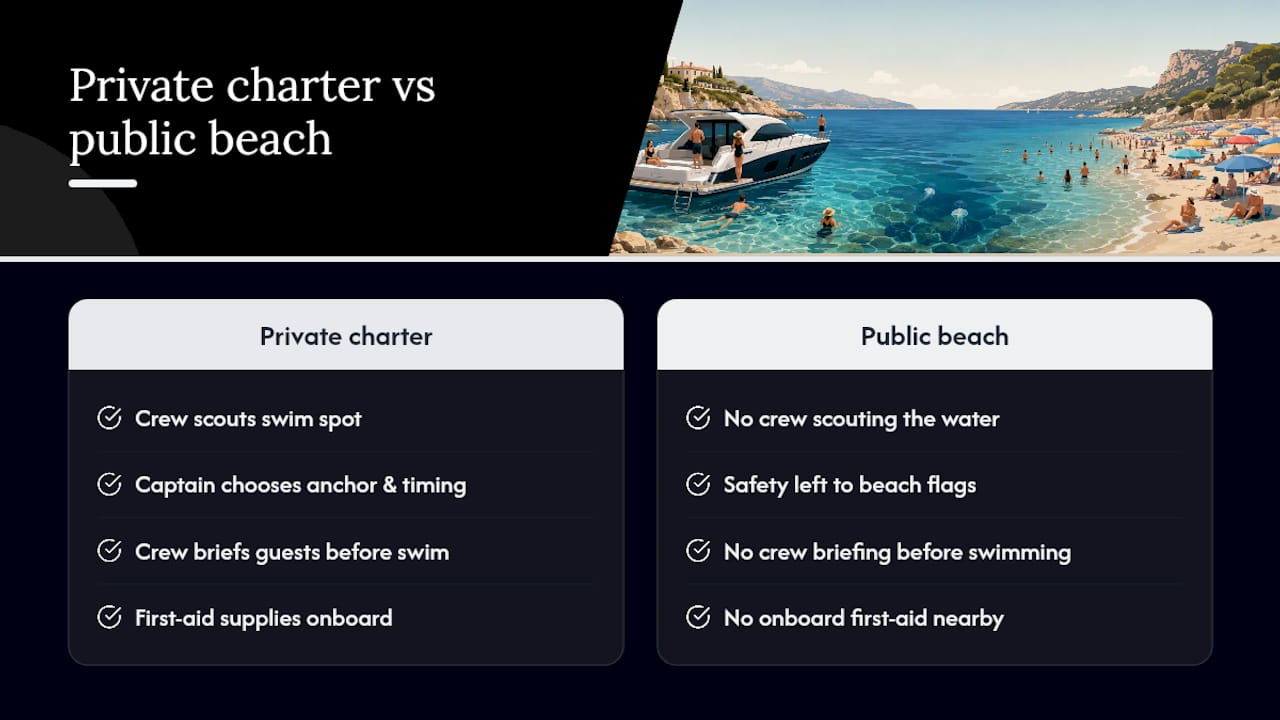
A private charter with Etcharters gives you something a public beach can’t: a crew that scouts the swim spot before you jump in. Anchoring choices, timing, and on-the-water judgment calls are made by a captain who knows the coast, not left to a flag you might miss from your towel. Every yacht carries first-aid supplies on board, and the crew briefs guests before every swim stop, so protective gear and a scraping card are never more than a few steps away.
Etcharters operates exclusively across Sardinia and the wider Mediterranean, with support available around the clock for the length of your charter. If a private, supervised swim day sounds better than checking beach flags on your own, browse the fleet of yachts and catamarans or get in touch to customize your holiday and lock in dates before peak season fills the calendar.
This article is general information, not a substitute for advice from a qualified doctor. Consult a qualified healthcare professional about your own circumstances before acting on anything here.
Sources
Meduse in mare, cosa fare davvero se ti pungono: gli errori da evitare – Il Messaggero
Meduse a luglio: perché ci sono e come proteggersi | Scienza & Salute
Meduse: cause, rischi e come evitare le punture – TCS
FAQ
What Should You Do to Avoid Getting Stung by a Jellyfish?
Check lifeguard flags and local reports before swimming, scan the water for jellyfish, and wear a rashguard or lightweight wetsuit for longer swims or snorkeling. Avoid the water after storms or strong onshore winds, since both push jellyfish toward the coast.
What Should You Do If There Are Jellyfish in the Sea?
Stay out of the water if you see jellyfish near the shore or floating at the surface, and keep children close if they’re already in the water. Watch for beach flags or lifeguard warnings, and withdraw calmly rather than swimming through a visible cluster.
Is Hot Water Effective Against Jellyfish Stings?
Yes, for many Mediterranean species. Heat around 104 to 113°F (40 to 45°C) breaks down the thermolabile toxins that many jellyfish carry, which is why immersing the sting in warm water or applying a hot pack often eases pain faster than cold. Use caution with young children, whose skin burns more easily at that temperature.
What Are the Best Remedies for a Jellyfish Sting?
Rinse the area with seawater, scrape off any tentacles with a rigid plastic card, and apply heat if safe to do so. Skip urine, alcohol, ammonia, and sand, all of which are ineffective and can worsen irritation according to multiple safety reviews.

